
Replacing a heating or air conditioning system can be a major household expense. Whether your air conditioner has stopped working, your furnace needs replacement, or you want to install a more energy-efficient heating and cooling system, the total cost can be difficult to cover at once.
For many homeowners, financing provides a way to complete the installation without paying the entire amount upfront. Instead of using all their savings, they can spread the cost over an agreed repayment period through a loan, contractor payment plan, credit card or another financing arrangement.
However, choosing the right financing option requires more than looking at the monthly payment. Interest rates, fees, repayment periods, credit requirements and the total amount payable can make a significant difference to the cost of a heating and air conditioning project.
This guide explains how to finance heating and air conditioning in 2026, the different payment options available, how to qualify, what to consider before applying and how to avoid expensive financing mistakes.
This guide focuses primarily on homeowners in the United States. Financing products, eligibility rules, incentives and consumer protections vary by country.
What Is HVAC Financing?
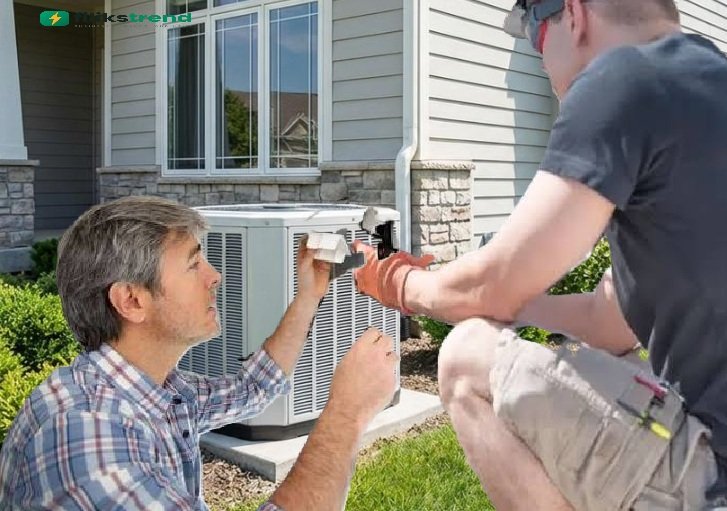
HVAC financing is a way to pay for heating, ventilation and air conditioning equipment and installation through borrowed money or an agreed payment arrangement.
HVAC stands for heating, ventilation and air conditioning. A residential HVAC system may include an air conditioner, furnace, heat pump, ventilation equipment, ductwork, thermostat and other components that help control indoor temperature and air circulation.
Rather than paying the full installation cost immediately, a homeowner can use an eligible financing option and repay the amount over time.
For example, someone who needs a new heating and cooling system may receive a contractor’s quotation for $12,000. If the homeowner qualifies for financing, they may be able to borrow the money and repay it in monthly instalments.
The actual payment will depend on the amount borrowed, annual percentage rate (APR), fees and repayment term.
HVAC financing may cover:
- A new central air conditioning system.
- Furnace replacement or installation.
- Heat pump installation.
- Heating and cooling system replacement.
- Ductwork improvements.
- Thermostat upgrades.
- Eligible ventilation improvements.
- Labour and professional installation costs.
Not every lender covers every type of project. Before applying, confirm whether the financing arrangement includes both equipment and installation.
7 Ways to Finance Heating and Air Conditioning
Homeowners have several options when they cannot afford to pay for a new HVAC system upfront. The most suitable option depends on their credit history, income, available savings, homeownership status and the amount required.
Here are seven common ways to finance heating and air conditioning.
1. HVAC Financing Through a Contractor
One of the most convenient ways to finance a new heating or air conditioning system is through the contractor installing it.
Some HVAC contractors work with banks and third-party financing companies to provide payment plans to customers. This allows homeowners to discuss the installation and financing arrangements during the same process.
Instead of arranging a separate loan independently, the customer may be able to complete a financing application through the contractor.
Depending on the lender and promotion, the available arrangement may include:
- Fixed monthly repayments.
- Promotional interest rates.
- Short-term or long-term repayment plans.
- Financing for equipment and installation.
- Different loan amounts for eligible applicants.
Some contractors advertise promotional offers, including 0% APR financing for qualifying customers. However, these offers are not automatically available to everyone.
Approval usually depends on the financing provider’s requirements, which may include credit history, income and existing debt.
Advantages
- Convenient application process.
- Financing can be arranged alongside installation.
- Some contractors offer promotional financing.
- Equipment and labour may be included in one arrangement.
Disadvantages
- Financing may only be available for selected equipment or contractors.
- Interest rates and fees can vary.
- Promotional offers may have strict repayment conditions.
- The financed price may differ from the cash price.
Before accepting a contractor’s offer, ask for the cash installation price and the financed price for the same equipment and work. This helps you determine whether the financing arrangement is genuinely competitive.
2. Personal Loans
A personal loan is another option for financing heating and air conditioning.
Personal loans are offered by banks, credit unions and online lenders. Unlike a loan specifically arranged through an HVAC contractor, a personal loan can give you more freedom to choose an installation company.
If approved, the lender generally provides a lump sum that you repay through scheduled instalments.
For example, a homeowner who needs $10,000 for an air conditioning replacement may apply for a personal loan and use the approved funds to pay the contractor.
The loan’s interest rate and repayment period depend on the lender and the borrower’s financial profile.
Advantages
- You can compare several lenders.
- You may choose your own HVAC contractor.
- Many personal loans have fixed repayment schedules.
- Unsecured personal loans generally do not require your home as collateral.
Disadvantages
- Interest rates may be higher than some secured loans.
- Some lenders charge origination fees.
- Approval depends on income and creditworthiness.
- Borrowing more than necessary can increase your financial burden.
When comparing personal loans, examine the APR rather than looking only at the advertised interest rate. APR provides a broader picture of borrowing costs because it can include certain fees.
You can compare loan terms through your bank, credit union and established lending platforms.
3. Home Equity Loans
Homeowners who have built up equity in their property may consider a home equity loan.
Home equity represents the difference between the current value of a property and the amount still owed on its mortgage and other secured debts.
A home equity loan allows an eligible homeowner to borrow against that equity. The borrower generally receives a lump sum and repays it according to the loan agreement.
Some homeowners use this type of financing for major property improvements, including:
- Replacing an old HVAC system.
- Installing a new heating system.
- Improving home insulation.
- Upgrading air conditioning equipment.
- Completing several home improvement projects.
Advantages
- May offer a lower interest rate than an unsecured personal loan.
- Often provides a lump sum for larger projects.
- Fixed-rate options may offer predictable payments.
Disadvantages
- Your home serves as collateral.
- Closing costs and other fees may apply.
- Approval can take longer.
- Failure to repay can put your property at risk.
A home equity loan should be considered carefully. It may not be sensible to put your home at risk for an HVAC project if you cannot comfortably afford the repayments.
4. Home Equity Line of Credit (HELOC)
A home equity line of credit, commonly called a HELOC, is another financing option for homeowners with sufficient property equity.
Unlike a traditional home equity loan, which generally provides a lump sum, a HELOC gives an approved borrower access to a revolving credit line up to a specified limit.
You can draw money from the available credit when needed and repay the amount according to the agreement.
This arrangement may be useful when an HVAC project involves several stages or when the final installation cost is not known immediately.
However, many HELOCs have variable interest rates. This means the amount of interest you pay may change over time.
Advantages
- Flexible access to approved credit.
- Useful for projects with changing expenses.
- You may only pay interest on the amount borrowed during the applicable draw period.
Disadvantages
- Your home is used as collateral.
- Interest rates may increase.
- Fees and closing costs may apply.
- Repayment arrangements can become more demanding after the draw period.
Before choosing a HELOC, understand the draw period, repayment period, interest rate calculation and possible changes in monthly payments.
5. Credit Cards With Promotional 0% APR
Some homeowners use credit cards to pay for HVAC repairs or installations.
A credit card with an introductory 0% APR offer may provide a way to spread payments over a promotional period without paying interest on eligible purchases, provided the cardholder follows the terms.
However, not all promotional credit card offers work the same way.
Some provide a genuine introductory 0% APR, while others use deferred interest arrangements. Under a deferred interest offer, interest may accumulate during the promotional period and become payable if the required balance is not cleared by the deadline.
This difference is important.
Advantages
- Convenient payment method.
- May offer an interest-free introductory period.
- Useful for smaller HVAC repairs or installations.
- Can provide flexibility when the balance is repaid on time.
Disadvantages
- Standard credit card APRs can be expensive.
- Promotional periods are limited.
- High balances can affect credit utilisation.
- Deferred interest terms can result in unexpected costs.
Before using a credit card, confirm the promotional period, the standard APR after the promotion, minimum payment requirements and whether unpaid interest can be added retroactively.
Avoid using a high-interest credit card for a large HVAC project unless you have a realistic repayment plan.
6. Manufacturer Financing
Some heating and air conditioning manufacturers work with financial institutions to provide financing through participating dealers.
This means homeowners purchasing equipment from an eligible dealer may be able to access financing associated with a particular manufacturer.
Examples of HVAC manufacturers with financing information or participating dealer programmes include:
These companies may provide information about financing programmes, promotional offers and participating contractors.
However, the manufacturer is not necessarily the lender. Financing may be provided by a partner bank or third-party financing company.
Approval requirements, interest rates and repayment terms vary.
Advantages
- Convenient financing through participating dealers.
- Some programmes offer promotional terms.
- Equipment and installation may be financed together.
- Customers can review financing while selecting a system.
Disadvantages
- Offers may be restricted to selected dealers.
- Financing may be limited to particular products.
- Credit approval is usually required.
- Promotional terms can change.
Always read the financing agreement provided by the actual lender. Do not assume that a manufacturer’s advertised offer applies to every customer or every installation.
7. Government, Utility and Energy-Efficiency Programmes
Some homeowners may qualify for government, state, local or utility programmes that help reduce the cost of energy-related home improvements.
Depending on the location and programme, assistance may include:
- Rebates for qualifying heating equipment.
- Financial assistance for energy improvements.
- Low-interest energy loans.
- Income-based home energy support.
- Utility company efficiency incentives.
These programmes are not necessarily loans. Some reduce the amount a homeowner needs to pay, while others provide financing with specific eligibility conditions.
Availability depends on the property location, household income, equipment type, contractor requirements and programme funding.
For US homeowners, useful starting points include:
- ENERGY STAR for information about energy-efficient products.
- U.S. Department of Energy for energy programmes and home efficiency information.
- Database of State Incentives for Renewables & Efficiency (DSIRE) for state-level energy incentives and policies.
Do not assume that a rebate or tax incentive is available simply because a contractor advertises an energy-efficient system. Verify the current rules, purchase dates and eligibility requirements with the official programme administrator.
HVAC Financing Options Compared
The following table summarises the main financing methods.
| Financing Option | Main Advantage | Important Risk |
|---|---|---|
| Contractor financing | Convenient application through installer | Promotional terms and dealer pricing |
| Personal loan | Freedom to choose a contractor | Interest and origination fees |
| Home equity loan | May offer a competitive rate | Home is collateral |
| HELOC | Flexible borrowing | Variable interest and property risk |
| 0% APR credit card | Potential interest savings | High APR after promotion |
| Manufacturer financing | Equipment-related offers | Limited dealer or product eligibility |
| Government or utility programme | Potential rebates or affordable financing | Location and eligibility restrictions |
There is no single financing option that is best for every homeowner. Compare the total amount payable, monthly instalment, interest rate, fees and repayment conditions before making a decision.
How Much Does It Cost to Finance a New HVAC System?
The amount required to finance a heating and air conditioning system depends on the size of the property, equipment type, installation complexity and contractor pricing.
A simple air conditioning replacement may cost considerably less than a complete heating and cooling system installation that requires new ductwork, electrical improvements and other modifications.
Your final quotation may include:
- Equipment purchase.
- Labour and installation.
- Removal and disposal of old equipment.
- Ductwork modifications.
- Electrical work.
- Thermostat installation.
- Permits and inspection fees.
- Additional materials.
For this reason, homeowners should obtain an itemised quotation before applying for financing.
Example of HVAC Monthly Payments
The following examples show how financing terms can affect monthly payments.
Assume a homeowner borrows $10,000 through a fixed-rate loan with no additional fees.
| Loan APR | Repayment Period | Approximate Monthly Payment |
|---|---|---|
| 0% | 36 months | $277.78 |
| 6% | 36 months | $304.22 |
| 10% | 36 months | $322.67 |
| 10% | 60 months | $212.47 |
| 12% | 60 months | $222.44 |
These are illustrative estimates based on fixed monthly repayments. They are not offers from a lender.
The example demonstrates why a longer repayment period can reduce the monthly instalment while increasing the total interest paid.
For instance, borrowing $10,000 at 10% APR for 36 months produces a higher monthly payment than borrowing the same amount over 60 months. However, the longer loan generally costs more in total interest.
Use a loan calculator to compare different amounts, rates and repayment periods before applying.
How to Qualify for HVAC Financing
Eligibility requirements differ between financing providers. Some lenders focus heavily on credit history, while others also consider income, existing debts and the amount requested.
The following factors may influence your application.
1. Credit Score
Your credit score can affect whether you qualify for financing and the interest rate offered.
Applicants with stronger credit histories may have access to more competitive terms, while people with lower scores may face higher rates or stricter requirements.
There is no universal credit score required for every HVAC financing programme.
Check the lender’s eligibility requirements before submitting a formal application.
2. Income and Employment
Lenders may ask for information about your income and employment to determine whether you can afford the repayments.
Depending on the provider, you may be asked to supply:
- Recent pay slips.
- Bank statements.
- Employment details.
- Tax information.
- Other evidence of income.
Self-employed applicants may need to provide additional financial documentation.
3. Existing Debt
Your existing financial obligations can influence the amount a lender is willing to approve.
A lender may consider your mortgage, credit card balances, personal loans and other monthly payments when assessing affordability.
4. Homeownership Status
Some financing options, including home equity loans and HELOCs, are specifically designed for property owners with sufficient equity.
However, contractor financing, personal loans and eligible credit cards may be available without using a home as collateral.
5. Project Cost
The estimated cost of the HVAC installation can influence the amount you need to borrow.
Some financing providers have minimum and maximum loan amounts. Obtain a complete quotation so you know how much financing is necessary.
Step-by-Step: How to Finance a Heating and Air Conditioning System
If you are planning to finance a new HVAC system, the following process can help you make a more informed decision.
Step 1: Identify the Problem With Your Existing System
Before replacing your equipment, ask a qualified HVAC professional to inspect it.
A system that is not cooling or heating properly may need a repair rather than a complete replacement.
Request an explanation of the problem, the recommended solution and the expected cost.
Step 2: Get Multiple Installation Quotes
Contact more than one qualified contractor and request itemised quotations.
Compare the proposed equipment, installation work, warranty coverage, labour costs and any additional charges.
Do not choose a contractor based only on the lowest advertised monthly payment.
Step 3: Calculate How Much You Need
Once you have selected a suitable quotation, calculate the amount you need to finance.
If you have savings available, you may decide to make a down payment to reduce the amount borrowed.
However, avoid using all your emergency savings simply to reduce a loan balance.
Step 4: Compare Financing Offers
Review financing from the contractor, your bank, credit union and other eligible lenders.
Compare:
- Annual percentage rate.
- Loan amount.
- Monthly payment.
- Repayment term.
- Origination fees.
- Late payment charges.
- Prepayment conditions.
- Total repayment amount.
The cheapest financing arrangement is not always the one with the lowest advertised monthly payment.
Step 5: Submit Your Application
Once you select a financing provider, complete its application process.
You may need to provide identification, income information, employment details and other documents.
The lender will review your application and determine whether you qualify.
Step 6: Read the Agreement Before Signing
Do not sign a financing agreement until you understand the payment obligations.
Check whether the interest rate is fixed or variable, whether a promotional offer includes deferred interest and what happens if you miss a payment.
Also confirm whether the financing covers the complete installation.
Step 7: Complete the Installation and Manage Payments
After financing is approved, arrange the installation with your contractor.
Keep copies of the contract, equipment details, warranty information and payment agreement.
Set up reminders or automatic payments if appropriate, and make sure you have enough money available for each instalment.
Questions to Ask Before Choosing HVAC Financing
Before accepting a loan or payment plan, ask the contractor and lender these questions:
- What is the total cash price of the installation?
- What is the total price if I use financing?
- What is the APR?
- Is the interest rate fixed or variable?
- Is the promotional 0% offer genuine 0% APR or deferred interest?
- How many months do I have to repay the balance?
- Are there application or origination fees?
- Does the financing cover installation labour and equipment?
- Can I repay the loan early without a penalty?
- What happens if I miss a payment?
- Who is the actual lender?
- What warranty applies to the equipment and installation?
Getting clear answers can help you avoid unexpected costs.
Common Mistakes to Avoid When Financing HVAC Equipment
Financing can make an expensive home improvement project more manageable, but choosing the wrong agreement can create unnecessary financial pressure.
Here are some mistakes to avoid.
Focusing only on monthly payments: A small monthly instalment may look attractive, but a long repayment period can increase the total amount paid.
Ignoring the APR: Always compare APR and fees, not just the advertised interest rate.
Accepting a contractor’s first offer: Get additional quotations and compare financing from independent lenders.
Misunderstanding promotional interest: Some deferred-interest offers can result in significant charges if the balance is not cleared by the deadline.
Borrowing more than necessary: Finance the actual project cost rather than taking on additional debt without a clear reason.
Skipping the equipment inspection: A full replacement may not be necessary if a professional repair can solve the problem safely and economically.
Failing to check contractor credentials: Make sure the installer has the appropriate licences, insurance and experience required in your area.
Is It Better to Finance HVAC or Pay Cash?
Whether to finance or pay cash depends on your savings, financial obligations and the terms available.
Paying cash can help you avoid loan interest and monthly repayments. It may also give you more negotiating power with some contractors.
However, using all your savings to replace an HVAC system could leave you without enough money for emergencies or other essential expenses.
Financing can preserve cash reserves and spread a large expense over time. The disadvantage is that interest and fees may increase the overall cost.
Consider paying cash if:
- You have enough savings after the purchase.
- You can avoid compromising your emergency fund.
- The contractor offers a competitive cash price.
- You prefer not to take on additional debt.
Consider financing if:
- The system needs urgent replacement.
- Paying upfront would exhaust your savings.
- You qualify for affordable financing.
- You can comfortably manage the monthly payments.
- The agreement has clear and reasonable terms.
The important thing is to compare the financial consequences of both choices rather than assuming one is always better.
Read also
- Highest Paying Finance Jobs in 2026: Top Careers and Salaries
- NYS Taxation and Finance Login: How to Access Your Account, Pay Taxes and Check Refunds
- Kia Motor Finance: Login, Payments, Auto Loans, Rates and Application Guide
- Bryce Alakai and Trinity Tatum Finances: Net Worth, Earnings, $100,000 Prize and Lifestyle
Frequently Asked Questions About Financing Heating and Air Conditioning
1. Can I finance a new heating and air conditioning system?
Yes. In the United States, homeowners may be able to finance a new HVAC system through contractor financing, personal loans, home equity loans, HELOCs, manufacturer programmes or eligible credit cards. Approval and terms depend on the financing provider.
2. Can I finance an air conditioner with no money down?
Some HVAC financing programmes offer no-down-payment arrangements to qualifying customers. However, not every lender provides this option. Check the agreement for fees, interest rates and repayment conditions before accepting the offer.
3. What credit score do I need for HVAC financing?
There is no single credit score requirement for all HVAC financing providers. Some programmes require stronger credit, while others may consider applicants with less established credit histories. The lender determines eligibility and pricing.
4. Can I finance HVAC equipment with bad credit?
It may be possible, depending on the lender and financing arrangement. Applicants with poor credit may have fewer options, higher interest rates or lower approved amounts. Consider comparing offers carefully and avoid agreements with unaffordable repayments.
5. Does HVAC financing cover installation?
Many financing arrangements can cover both equipment and professional installation. However, the exact coverage depends on the lender and contractor. Confirm that labour, disposal, materials and other project costs are included before signing.
6. Can I finance a furnace and air conditioner together?
Yes. Some contractors and lenders allow homeowners to finance a complete heating and cooling system replacement under one arrangement. Ask whether the loan covers both units, installation and any necessary ductwork modifications.
7. Is 0% HVAC financing really interest-free?
It can be, but you must understand the specific agreement. A genuine 0% APR offer is different from deferred interest financing. With deferred interest, unpaid balances can trigger accumulated interest if the promotional conditions are not met.
8. Can renters finance a new HVAC system?
Most major HVAC replacement projects are arranged by property owners because the equipment is part of the building. Renters should discuss heating and cooling problems with their landlord before arranging financing or authorising a replacement.
9. Can I pay off HVAC financing early?
Some personal loans and financing arrangements allow early repayment without a penalty, but this is not universal. Check the contract for prepayment restrictions and any applicable charges.
10. What is the best way to finance a new HVAC system?
The best option depends on your financial situation. Contractor financing may be convenient, a personal loan may offer flexibility, and a home equity product may provide a different interest-rate structure. Compare the APR, fees, total repayment amount and risks before deciding.
Conclusion
Financing heating and air conditioning can help homeowners replace an old furnace, install a new air conditioner or upgrade an entire HVAC system without paying the full cost upfront.
Options include contractor financing, personal loans, home equity loans, HELOCs, manufacturer financing and promotional credit cards. Some homeowners may also qualify for local utility or energy-efficiency programmes.
Before choosing an option, obtain detailed installation quotations, compare financing offers and understand the total amount you will repay. Pay particular attention to interest rates, promotional conditions, fees and the consequences of missed payments.
A well-chosen financing arrangement can make an essential home improvement more manageable. The goal is not simply to get a new heating and cooling system quickly, but to pay for it under terms that fit your household budget.
1 thought on “How to Finance Heating and Air Conditioning in 2026: Best Options”